





Fish Processing
For large-scale fisheries and seafood processing businesses, consistent temperature control is essential. From receiving and processing through to packing, storage and shipping, effective cooling helps protect the freshness, appearance, color and overall quality of seafood.
At Ice Systems, we supply commercial ice machines for large-scale fisheries, seafood processors and high-volume seafood wholesalers and distributors. Our machines are assembled in the USA at our South Carolina base, with support available nationwide.
Producing ice on site gives seafood businesses access to a reliable supply where it is needed. Choosing the right commercial ice machine depends on more than production capacity. Ice type, handling processes, available space and seasonal demand all influence the system required.
In this guide, we explore large-scale commercial ice machines for land-based fisheries and seafood facilities, including flake and chip ice, processing applications, capacity planning and ongoing US support.
Why Is Ice So Important in the Fish Industry?
Fresh seafood is highly temperature-sensitive. Once fish has been harvested, maintaining suitable temperatures throughout handling, processing, storage and shipping is vital for protecting product quality.
Unloading, grading and packing can expose seafood to temperature fluctuations. Access to ice during these stages gives processors a practical way to keep products cool as they move through the facility.
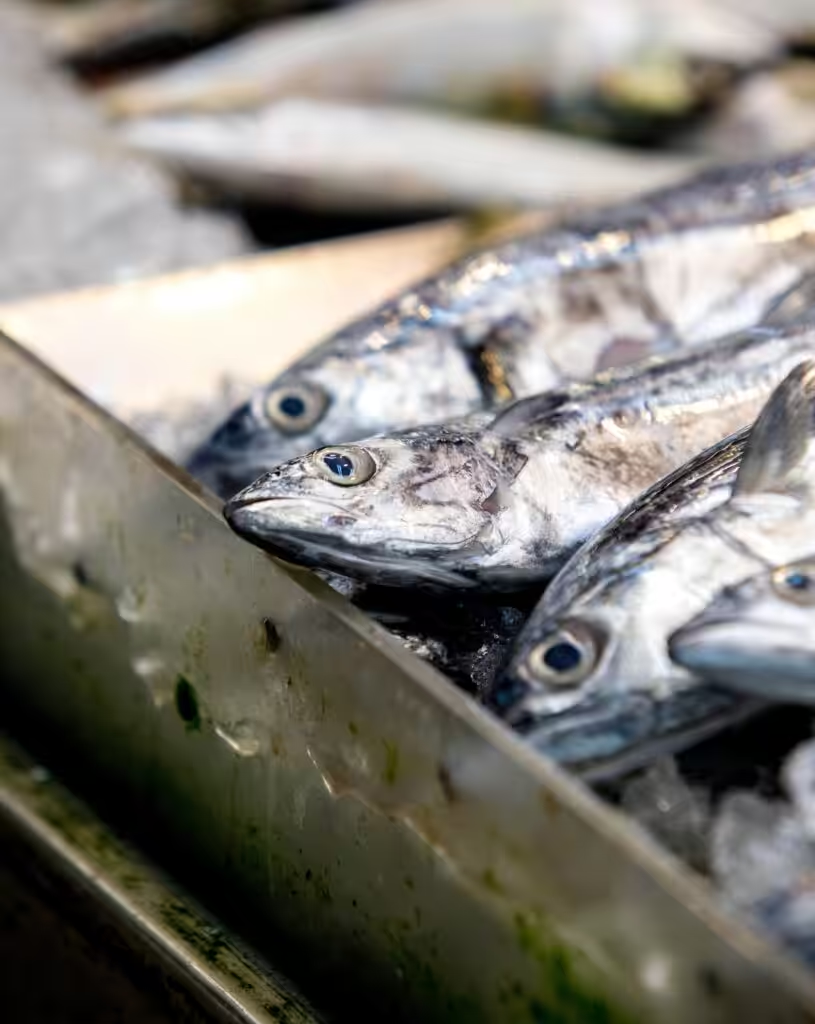
Commercial ice can be applied directly around the product, making it useful for irregularly shaped seafood such as whole fish, shrimp and shellfish. Keeping seafood cool helps it retain its color, firmness and overall appearance.
Having a commercial ice machine on site also lets businesses plan ice production around their operating needs, rather than relying entirely on externally supplied ice.
What Types of Ice Are Used in the Fish Industry?
Two types of ice are particularly relevant to fish and seafood operations: flake ice and chip ice. Each has different characteristics, so the right choice depends on how the ice will be used and the needs of the facility.
1. Flake Ice
Our subcooled flake ice is dry and fine, produced at 19.4°F. It cools quickly, stores well without clumping and can be used for packing, storing and transporting seafood. Its shape allows it to pack closely around irregular products such as whole fish and shrimp, supporting effective heat exchange.
This close coverage is useful when handling fish of different sizes and shapes. Flake ice can be used throughout processing, packing, storage and transportation, wherever colder, drier ice is suited to the product and process.
2. Chip Ice
Our chip ice is produced at approximately 30°F to 31°F. It offers different characteristics from flake ice and can suit seafood processes where a wetter application is preferred, including product handling and washing.
Flake Ice vs Chip Ice: Which Is Best for Fish?
Flake ice may be preferable when rapid cooling, close coverage around irregular products and colder, drier ice are priorities.
Chip ice may be more appropriate for handling and washing processes where a wetter application is required.
The key is to match the ice to the application. Alongside capacity, consider how the ice will contact the seafood, where it will be used and what happens to the product next. A facility with several processes may need to assess the requirements of each production stage.
Where Is Ice Used During Fish Processing?
Commercial ice can be needed at several stages of a seafood operation. Planning supply around these stages helps ensure ice is available where products are handled, packed and prepared for distribution.
- Receiving and initial handling: Ice can be applied when fish arrives at a land-based facility to help manage temperature before grading, processing or storage.
- Grading and processing: Seafood may pass through several processes before it leaves a facility. Access to ice at the relevant stations helps maintain suitable temperatures as products are handled and moved between production stages.
- Packing and storage: Ice may be layered around fish to help keep it chilled during packing and storage. At high-volume facilities, ice production and storage should be considered alongside packing schedules, product throughput and shipping requirements.
- Transportation: Cooling remains important when seafood leaves the processing facility. Ice can continue to provide cooling during transportation, making reliable production important for businesses preparing products for onward distribution.
Commercial Ice Machines for Different Seafood Operations
Ice requirements vary between large-scale fisheries, seafood processors and distribution businesses. Throughput, operating hours and facility layout all affect the system needed.
Our large-scale commercial ice machines support operations including:
- Large-scale land-based fisheries and fish processors
- High-volume seafood wholesalers and distributors
- Seafood import and export facilities
- Shellfish processing facilities
How Much Ice Does a Fish Processing Business Need?
There is no single production capacity that suits every seafood facility. To assess your requirements, consider:
- Average daily seafood throughput
- Peak production and seasonal demand
- The species and products being handled
- Ice use at each processing stage
- The number of production lines and stations
- Ice and product storage requirements
- Packing and shipping schedules
Larger seafood processing and import-export facilities may require 10 or more tons of ice per day and continuous production. These figures are indicative guidance rather than a substitute for assessing the individual site. The final specification should reflect the demands of the entire operation.
Think About Peak Demand, Not Just an Average Day
It can be tempting to specify a machine around average daily use. However, a system that meets normal requirements may come under pressure when production volumes rise. Seasonal peaks, busy shipping periods and changes in processing schedules should all be considered.
Rental can be worth considering alongside purchasing when demand changes during the year. Short- or long-term rental provides an option for seasonal requirements or temporary increases in production.
Where Should a Commercial Ice Machine Be Installed?
Installation should take into account where ice is needed within the production process. In land-based seafood facilities, equipment can serve processing lines, integrate with chilled storage areas or form part of a centralized distribution system supplying several stations.
For example, ice may need to be supplied around grading, filleting or packing areas. Considering how it reaches each point can help avoid repeated manual movement from an inconvenient part of the facility.
Reviewing the complete workflow at the specification stage helps identify an arrangement suited to the facility’s layout, production requirements and storage needs.
What Should You Look for When Choosing a Commercial Ice Machine for Fish?
Before investing in a system, work through these questions with your supplier.
- What type of ice do you need? Start with the application. Cold, dry flake ice can pack closely around irregularly shaped seafood, while chip ice can suit processes where a wetter application is preferred.
- How much ice do you need? Consider normal daily use alongside peak demand. Production capacity and storage need to support the facility during busy periods as well as routine operations.
- Where will the ice be used? Think about how ice reaches the product. Your system may need to serve one processing station, several production lines, chilled storage or shipping areas.
- How will the machine fit into your workflow? Consider equipment placement, storage and distribution together. The machine should work as part of the wider production process.
- What US assembly and support are available? Our machines are assembled at our South Carolina base, with support across the USA. Discuss servicing, spare parts and ongoing technical support alongside capacity and installation requirements.
Buying vs Renting a Commercial Ice Machine
Purchasing may make sense when ice is a consistent, long-term requirement and the machine will become a permanent part of the facility’s operation.
Rental offers flexibility when:
- Additional capacity is required temporarily
- Ice demand is seasonal
- Production has increased unexpectedly
- A business wants access to equipment before making a capital investment
We provide commercial machines for purchase as well as short- and long-term rental across the USA. The right choice depends on the duration and consistency of your requirements.
Why Produce Ice On Site?
For businesses using substantial quantities of ice, on-site production gives teams direct access to ice as part of their everyday workflow. It allows production to be planned around processing schedules, daily volumes, packing, storage and shipping. Seasonal changes in demand should also be considered when choosing the system.
USA Assembly in South Carolina and Nationwide Support
Our large-scale commercial flake and chip ice machines are assembled in the USA at our South Carolina base. Our range includes capacities from 1,300 lbs to 19,800 lbs per 24 running hours, with equipment available to purchase or rent.
From our South Carolina base, we support customers across the USA. For large-scale fisheries and seafood businesses, this brings together US assembly and nationwide support for land-based ice production.
We offer site surveys to help businesses assess capacity, ice type, facility layout and the points where ice is needed in the production process. Servicing, spare parts and ongoing technical support can be discussed alongside the equipment specification.
If you are considering a commercial ice machine for your fish or seafood operation, contact our US team to discuss the type of ice, production capacity and system configuration suited to your facility.
Frequently Asked Questions
What type of ice is best for fish?
Both flake and chip ice can be suitable for seafood processing. Flake ice is cold and dry, and packs closely around irregular products such as whole fish and shrimp. Chip ice can suit handling and washing processes where a wetter application is preferred. The right choice depends on how and where the ice will be used.
How much ice does a seafood processing facility need?
Requirements depend on processing volume, species, handling methods, storage and shipping schedules. Larger seafood processors or import-export facilities may require 10 or more tons per day. This is indicative guidance; capacity should be assessed against the individual site’s daily and peak demand.
Where can an ice machine be installed in a seafood processing facility?
Depending on the workflow, a machine can be positioned around processing lines, integrated with chilled storage areas or form part of a centralized distribution system feeding multiple stations. The right arrangement depends on the facility and where ice is required.
Should I buy or rent an ice machine for my seafood business?
Buying may be preferable where ice production is a permanent, consistent requirement. Rental can be useful for seasonal demand, temporary increases in production or businesses that prefer to defer a capital investment.
Do you install the ice machines?
Yes. After a site survey and order confirmation, we aim to install and commission your ice machine within 5 to 7 working days.
Do you support saltwater machines, onboard ice machines or shop displays?
Our range is designed for high-volume, land-based seafood operations. We do not support saltwater ice machines, machines installed on board boats or shop display systems. Shop displays typically need less ice than the commercial machines we supply. Our smallest machine produces 1,300 lbs of ice per 24 hours.