






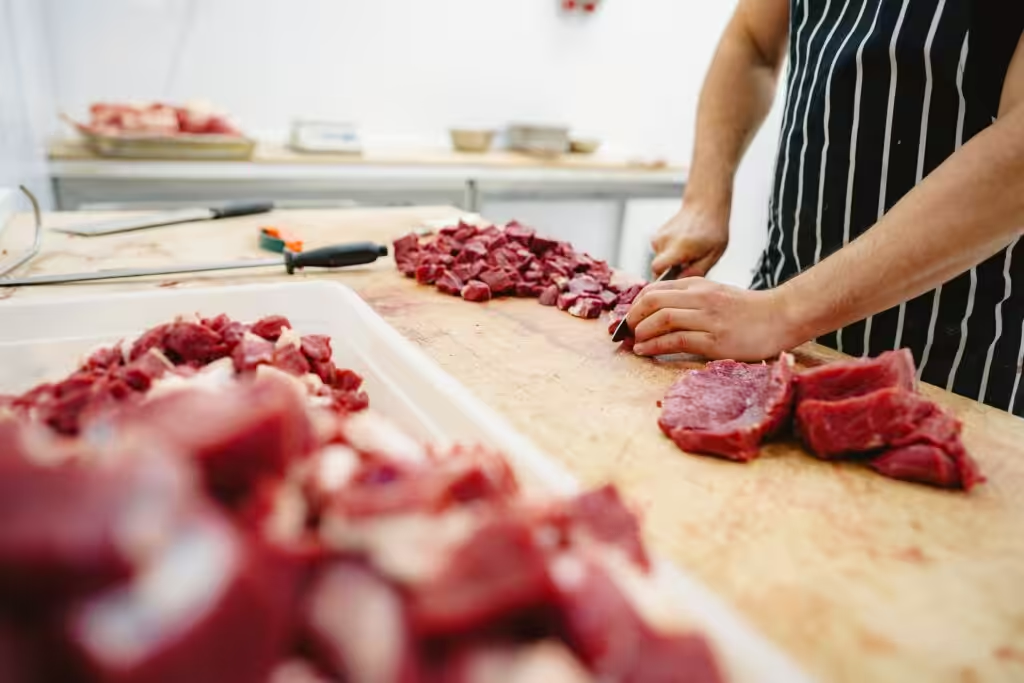
Meat Processing
From grinding and mixing to storage and transportation, temperature control is a key part of meat processing. On-site commercial ice machines give processors a dependable supply of ice to help manage heat during production and maintain product quality. This guide covers where ice is used, the differences between flake and chip ice, and what to consider when choosing the right type, capacity, and purchase or rental option for your facility.
Why Is Ice Used in Meat Processing?
Meat can gain heat during stages such as grinding, chopping and mixing. If that heat isn’t controlled, it can affect the condition and consistency of the finished product. Effective temperature management is therefore important throughout processing, storage and distribution.
Commercial ice provides processors with a practical method of introducing cooling at the point where it is required. For example, subcooled flake ice can help quickly lower meat temperatures and provide even cooling. Its structure also makes it suitable for direct contact with products without causing unnecessary damage. Rapid cooling, product integrity, hygienic handling, and temperature control during storage and transportation are key considerations when using commercial ice in meat processing.
For higher-throughput facilities, producing ice on site can also remove reliance on an external supply and make ice readily available as production requirements change.
Where Are Commercial Ice Machines Used in Meat Processing?
Ice requirements vary by product and processing stage. The following applications illustrate how commercial ice systems can be configured around different production needs.
- Sausage production, grinding, and mixing: Grinding, mixing, and bowl cutting generate heat as meat, fat, and other ingredients are processed. Flake ice can be added directly to suitable formulations to help control mixture temperature while contributing to the recipe’s water content. Ice dosing should reflect batch size, ingredient temperatures, and the required final mix temperature.
- Product cooling: Ice can be placed in direct contact with meat where suitable to provide rapid, even cooling. Flake ice is particularly useful because its shape allows it to conform closely to product surfaces. The large contact area helps transfer heat efficiently while the relatively soft flakes minimize the potential for physical damage to the product.
- Slaughterhouses and by-product handling: Ice can support specific cooling tasks after slaughter, including cooling hides before storage or transportation. A machine mounted above a collection container can deliver ice close to the point of use. The arrangement should suit the product, container movements, and cleaning access rather than be treated as a single solution for every slaughterhouse.
- Offal cooling: Edible offal may require rapid cooling after cleaning, sorting, or preparation. Flake ice can be applied around products held in containers to increase surface contact and help maintain their condition between processing stages. A machine positioned above a tote or collection bin can provide ice where it is needed; capacity should reflect throughput, incoming product temperature, holding time, and the facility’s validated cooling procedure.
- Poultry giblets and offal: Flake ice can help cool gizzards, hearts, and livers after removal and preparation. Its close contact with these components supports rapid cooling and helps maintain product quality between processing stages. A machine positioned above a collection container can supply ice near the point of use, with output matched to the volume of offal being handled rather than total whole-bird throughput.
- Storage and transportation: Temperature management does not end once processing is complete. Maintaining suitable conditions during storage, handling and distribution is also important. Ice provides an additional cooling option where products need their temperature maintained as they move through different stages of the operation or supply chain.
What Are the Benefits of an On-Site Commercial Ice Machine?
- Rapid cooling: One of the main advantages of flake ice is its ability to provide rapid heat transfer. Subcooled flake ice is produced at approximately 19.4°F, providing a cold, dry form of ice suitable for food-processing applications.
- More consistent temperature control: Having a dependable ice supply allows processors to use ice as and when production demands it. Rather than organizing processes around the arrival or availability of externally supplied ice, an appropriately sized system can continually generate ice on site.
- Helps maintain product quality: Even cooling can reduce unwanted temperature variation throughout the product. In processes such as sausage production, managing heat during processing can help protect the consistency and condition of the finished product.
- Easier handling: Flake ice has a thin, brittle structure and is dry to the touch, helping to prevent clumping and making the ice easier to handle and distribute through a processing environment.
- Reduced dependence on purchased-in ice: For businesses with substantial or recurring ice requirements, producing ice in-house means the availability of ice is much more closely aligned with your production operation. It can remove the logistical challenges associated with continually sourcing, receiving and managing externally produced ice.
- Scalable production: Ice requirements can differ significantly between meat processing facilities according to factors including output, product and processing stage. Choosing an appropriately sized system makes it possible to align ice production more closely with your actual usage instead of taking a one-size-fits-all approach.
Flake Ice vs Chip Ice for Meat Processing
Flake ice and chip ice have different structures and handling characteristics. The appropriate choice depends on how ice will be used within the process.
Flake ice
Flake ice is a popular choice for meat-processing applications because of its rapid cooling properties and ability to conform to product surfaces. Flake ice can be particularly useful where:
- Rapid heat transfer is important
- Ice needs good contact with irregular product surfaces
- Ice is incorporated into a production process
- High-volume cooling is required
- Gentle contact with the product is desirable
Chip ice
Chip ice, also known as nugget or pellet ice, has a compact, uniform structure. It can be used in meat and poultry facilities during mixing and temperature stabilization. Its greater density also helps it retain its structure during handling and transportation.
Both flake ice and chip ice can therefore have a role in meat processing, but the choice should reflect the specific application. Flake ice may be preferable for rapid contact cooling, while chip ice may suit mixing or temperature stabilization processes that require a denser ice form. Discuss the intended use with the supplier before selecting a system.
How Much Ice Does a Meat Processing Facility Need?
There isn’t one commercial ice machine capacity suitable for every processor. The appropriate output depends on factors such as:
- Daily production volumes
- Amount of ice required per batch
- Number and duration of production shifts
- Type of meat or product being processed
- Where ice is introduced into the process
- Peak rather than average demand
- Storage capacity
- Expected changes in production
This is why it is important to calculate your requirements around the actual production process rather than simply selecting the largest machine available.
When specifying a system, processors should consider not only how much ice they use in a day, but when they need it. A facility may have periods of intense demand followed by quieter periods, making peak requirements particularly important when considering machine output and ice storage.
What to Consider When Choosing a Commercial Ice Machine
Choosing an ice maker based on production capacity alone can overlook some important practical considerations.
- Required ice type: Start by determining whether flake, chip or another form of ice works best with your particular production process.
- Daily and peak demand: Calculate your normal daily consumption as well as the maximum amount of ice that may be required during your busiest periods.
- Available space: Consider where the machine, ice storage and associated equipment will be positioned and how easily operators can access the ice.
- Integration with production: In meat processing environments, commercial ice systems are often integrated into existing production workflows rather than operating simply as standalone equipment. Think about how ice will move from the machine to the point of use and whether storage, handling or automation equipment is required.
- Hygiene: Food-processing equipment needs to fit into the facility’s wider cleaning and hygiene processes. When comparing machines, check how internal water components are cleaned and sanitized, including whether an automatic hygiene cycle is available. However, an ice machine should still form part of the facility’s overall cleaning, maintenance and food-safety procedures.
- Maintenance and service support: An ice system can become an important part of day-to-day production, meaning unplanned downtime may be disruptive. When comparing suppliers, look beyond the machine itself and consider access to technical advice, servicing, preventive maintenance and replacement support.
Should You Buy or Rent a Commercial Ice Machine?
Buying and short- or long-term rental offer different ways to introduce on-site ice production. The choice depends on how long the equipment is needed and how predictable demand is. Buying may be suitable if:
- Your ice requirement is consistent and long term
- The system will form a permanent part of the production line
- You want to invest in your own production equipment
Renting may be suitable if:
- Demand fluctuates
- You experience seasonal production peaks
- You temporarily need additional ice capacity
- You are not ready to commit to purchasing equipment
Rental can therefore be especially useful when additional capacity is required for a defined period rather than permanently.
Ice Systems can help assess ice type, daily and peak demand, storage, and integration with existing meat processing operations. Commercial flake and chip ice machines are available to buy or rent across the United States, with installation, servicing, and ongoing support. For advice on matching a system to your facility’s requirements, contact the Ice Systems team.
Frequently Asked Questions
What type of ice is best for meat processing?
Flake ice is commonly used in meat processing because it offers rapid cooling and can conform closely to product surfaces. Its thin structure makes it suitable for applications where even contact cooling is important.
What temperature is flake ice?
Subcooled flake ice can be produced at approximately 19.4°F. Confirm the specified ice temperature for the machine being considered.
How big an ice machine does a meat processing facility need?
It depends on factors including production volume, product type, processing stages, operating hours and peak ice demand. Rather than sizing a machine solely around average daily consumption, facilities should also consider when ice is required and the maximum quantity needed during busy production periods.
Can commercial ice machines run continuously?
Commercial ice systems are available for high-output production environments, with capacities measured per 24 running hours. When selecting a system, match its output to your operating schedule and peak ice demand.
Should a meat processor buy or rent an ice machine?
This depends on the nature of the requirement. Purchasing can make sense for an established, ongoing need, while rental can offer greater flexibility for seasonal demand or temporary increases in capacity.