It seems like you’re visiting from a different country. Click the button below to visit the website in your area.










How do Industrial Flake Ice Machines Operate?
Yes, industrial ice systems can be monitored remotely when the correct controls, sensors and network connection are included in the installation.
Remote monitoring can allow operators and engineers to check whether a machine is running, view ice-storage levels, receive fault alerts and monitor general performance without being directly beside the equipment.
The exact information available will depend on the machine, its control system and the agreed installation specification. Remote monitoring should therefore be considered during the system-design stage rather than added as an afterthought.
How Do Industrial Flake Ice Machines Operate?
Industrial flake ice machines are designed for continuous operation. They will produce ice for as long as there is demand and sufficient storage capacity is available. Once the storage bin is full, the system will pause automatically. It will then restart when the stored ice is used and the ice level drops.
This is a normal operating cycle rather than a machine fault.
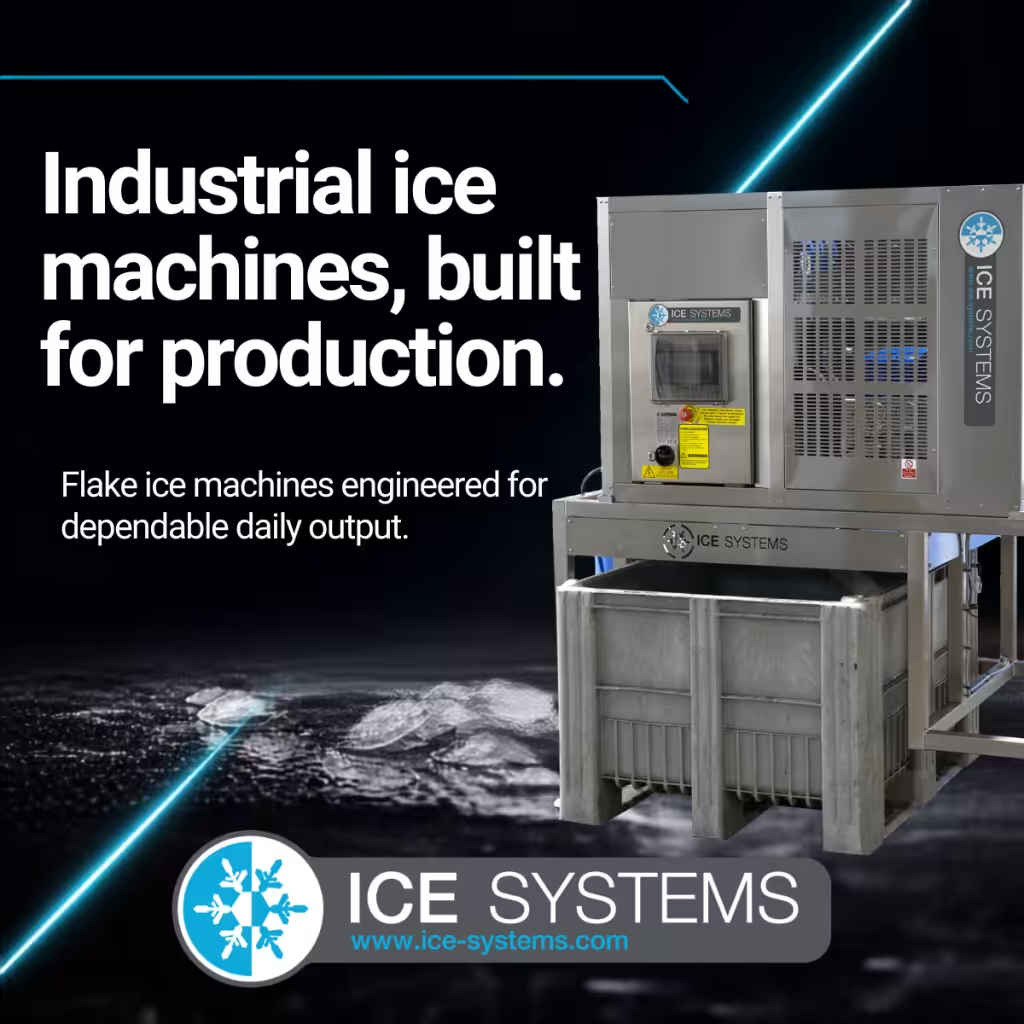
Our industrial flake ice machines are continuous-operation systems designed for sustained performance in high-throughput food production environments. The current range includes models producing between 600kg and 9,000kg per 24 running hours.
Remote monitoring can make this process easier to understand. Instead of seeing only that the machine has stopped, an operator may be able to see that the storage bin is full, no further ice is required, or the machine is available and waiting. This prevents a normal full-bin pause from being mistaken for a breakdown.
What Can Be Monitored Remotely?
The information available depends on the controls and sensors fitted to the system. A remote monitoring dashboard could show the following information.
- Machine status
The dashboard can show whether the machine is producing ice, paused because the storage bin is full or stopped due to a fault. Clear status information helps operators understand what the system is doing without having to inspect the machine directly.
- Ice-storage level
A level or bin sensor can tell the control system whether more ice is required.
When the upper level is reached, the machine pauses. When the level falls, demand returns and production can restart automatically.
Relevant ice systems machine configurations can include optional support frames with level and bin sensors. HMI control panels are also available on selected models.
Where suitable sensors and connectivity are installed, storage information may also be displayed remotely.
- Active alarms
Remote monitoring can provide alerts when a condition requires attention.
Possible alerts may include low water supply, refrigeration fault, sensor problem or service/inspection due. The alarm should explain what has happened and how serious the condition is. A full storage bin, for example, is normally an operating status rather than a fault.
- Production performance
A monitoring system may record how long the machine runs and how quickly the storage bin fills.
This information can help identify gradual performance changes. For example, if the machine normally fills a storage bin within a known period but begins taking significantly longer, further inspection may be required.
Production information can also help a business understand whether the available ice capacity is keeping up with demand during busy shifts.
- Running hours and maintenance information
Remote monitoring may also record total machine running hours, the number of starts and the time since the previous service. This information can help maintenance teams plan work around production rather than waiting for the machine to stop unexpectedly.
How Does Remote Ice Machine Monitoring Work?
A simple remote monitoring arrangement normally includes four main parts:
Machine and storage sensors > Local control system > Secure network connection > Remote dashboard or alert system
Sensors collect information from the machine and storage area. The local controller uses that information to operate the system.
Selected data can then be sent through an appropriate network connection to a remote dashboard. Depending on the installation, authorised users may view the dashboard on a computer, tablet or mobile device.
The local control system should remain responsible for operating and protecting the machine. The industrial ice machine should not depend on a remote dashboard or internet connection for its essential start, stop and safety functions.
If the remote connection becomes unavailable, the machine should normally continue operating locally while the connection problem is investigated.
Remote Monitoring Is Not the Same as Remote Control
Remote monitoring and remote control are different. Remote monitoring allows someone to view information such as machine status, alarms and performance. Remote control allows someone to issue commands or change settings from another location.
In many installations, monitoring provides most of the required operational benefit without allowing extensive remote control.
Where remote commands are needed, access should be restricted to authorised personnel. Important machine settings, safety controls and fault resets should not be freely accessible.
The exact level of remote access should be agreed between the equipment supplier, the customer’s engineering team and any site IT or automation specialists.
How Can Remote Monitoring Reduce Downtime?
Remote monitoring cannot prevent every mechanical or electrical failure. However, it can reduce the time between a problem developing and someone taking action.
Earlier warning of problems
A machine may continue operating while its performance gradually changes.
Remote data may show that:
- Ice production is falling.
- The storage bin is taking longer to fill.
- A water warning is occurring repeatedly.
- The machine is restarting more frequently.
- The same alarm is appearing on several shifts.
These warning signs can be investigated before they develop into a complete loss of ice production.
Faster fault reporting
When a fault does occur, accurate information can make diagnosis easier.
Instead of reporting only that “the ice machine has stopped”, the operator may be able to provide:
- The exact alarm message.
- The time the fault occurred.
- The machine’s operating status immediately beforehand.
- Recent water, motor or refrigeration information.
- Whether the fault has happened before.
This gives the service engineer more useful information before attending the site or providing telephone support.
Better capacity planning
Remote visibility can help production teams monitor how much ice is available before a busy period.
This is particularly useful where demand changes throughout the day. A facility may use relatively little ice during one shift but require much more during unloading, processing, mixing or packing.
The monitoring system can show whether the storage level is recovering quickly enough and whether production is likely to meet the next period of high demand.
More informed maintenance
Historical data can help maintenance teams identify patterns rather than treating every alarm as an isolated event.
It can also be used to compare machine performance before and after servicing. If a maintenance visit has corrected the issue, filling times, output or alarm frequency should return towards normal levels.
Ice Systems provides installation, commissioning, training, service agreements and ongoing technical assistance for its equipment. Its aftersales support includes telephone assistance and on-site engineering where required.
What Should a Remote Monitoring Dashboard Show?
A useful dashboard should be clear and simple. Operators should not have to review dozens of technical readings to understand whether the machine is working normally.
The main dashboard could show:
- Current machine status: Running, waiting, full-bin pause, maintenance or fault.
- Storage level: How much ice is currently available.
- Demand status: Whether the production process is requesting more ice.
- Active alarms: Any condition requiring operator or engineering attention.
- Recent production: How the machine has performed during the current shift or previous 24 hours.
- Running hours: Useful for maintenance planning.
- Connection status: Confirmation that the remote data is current.
More detailed technical information can be made available on a separate screen for engineers.
Operational Best Practice
Remote monitoring is most effective when it is introduced as part of a clear operating and maintenance plan.
- Decide what information is genuinely useful — not every reading needs to reach the dashboard, so agree with your engineering team which handful of metrics actually change what someone does that day.
- Set clear alarm priorities — a full-bin pause and a refrigeration fault should not look the same on screen, so make sure genuine faults stand out from normal status changes.
- Keep local controls in place — the machine’s essential start, stop and safety functions should keep working even if the remote connection drops.
- Restrict access — viewing data is different from changing settings, so limit who can adjust setpoints or reset alarms remotely.
- Train operators to interpret the information — a dashboard only helps if the team trusts it and knows what each status and alert actually means.
Reliable Ice Production Through Better Visibility
Industrial ice systems can be monitored remotely when suitable controls, sensors and connectivity are included.
Remote monitoring can provide clearer visibility of machine status, ice-storage levels, alarms, running hours and production performance. It can help operators recognise normal operating pauses, identify developing problems and provide service engineers with better diagnostic information.
It is important to remember that flake ice machines are designed for continuous operation. They produce ice while demand and storage capacity are available, pause automatically when the storage bin is full and restart when the ice level drops.
Remote monitoring does not change this process. It simply makes the process more visible. Businesses considering a new installation can explore Ice Systems’ range of industrial flake ice machines or learn more about its wider industrial ice machine supply and support.
Frequently Asked Questions
Do flake ice machines run continuously?
Flake ice machines are designed for continuous operation. They produce ice while there is demand and storage capacity available. When the storage bin is full, the system pauses automatically and restarts when ice levels fall.
Is a full storage bin an ice machine fault?
No. A full-bin stop is normally part of the machine’s automatic operation. The machine pauses because no more storage capacity is available and restarts when ice is removed.
Can remote monitoring prevent breakdowns?
Remote monitoring cannot prevent every failure. It can provide earlier warning of unusual performance, repeated alarms or changing operating conditions, allowing investigation before a complete shutdown occurs.


Products
Ice Systems Offers a Range of Industrial Flake and Chip Ice Machines
Aftersales
Industry Leading Service, Support, Installation and Training

Make An Enquiry
Call 01472 267524 for more information or complete the form below: