






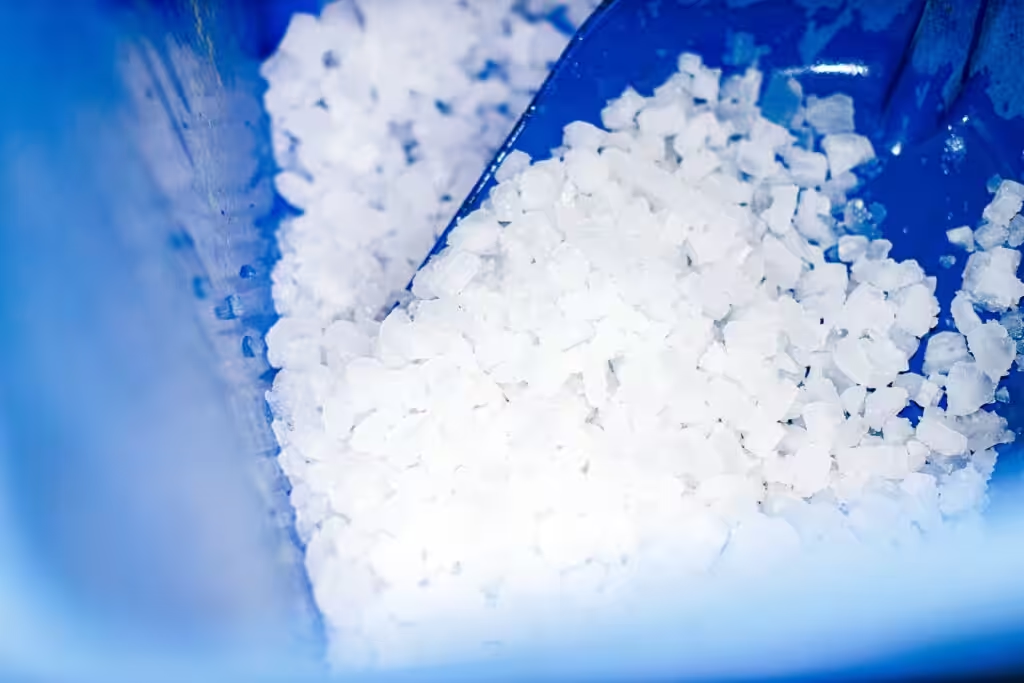
Scale Ice vs Chip Ice
Yes, flake ice cools faster than chip ice because it has a larger surface area and makes fuller contact with the product. This improves heat transfer efficiency, allowing temperatures to drop more quickly and evenly.
When comparing ice types in commercial and industrial environments, the structure and behaviour of the ice play a significant role in how effectively it cools. Flake ice and chip ice may appear similar at a glance, but their physical differences lead to noticeably different performance outcomes.

Flake ice is made up of thin, flat fragments that are soft and slightly wet. This composition allows it to spread and settle over products, forming a continuous layer. Because it moulds around surfaces so effectively, it minimises air gaps and maximises direct contact. This is critical, as air acts as an insulator and slows down the cooling process.
Chip ice, by contrast, consists of small, irregular chunks. While still useful for cooling, these pieces do not pack together as tightly. When piled over products, they tend to leave pockets of air between the ice and the surface. As a result, the transfer of heat is less efficient, and cooling takes slightly longer.
The superior cooling speed of flake ice is primarily due to its increased surface area and its ability to conform closely to whatever it is cooling. This makes it particularly effective in industries where rapid temperature reduction is essential. In food processing, for example, flake ice is widely used to preserve freshness in seafood, meat, and poultry.
Chip ice still serves a purpose, particularly in situations where ease of handling or drainage is more important than maximum cooling speed. However, when the priority is fast, uniform cooling, flake ice is generally the more effective option.
In summary, flake ice outperforms chip ice in terms of cooling speed due to its ability to create full surface contact and eliminate insulating air gaps. For businesses that rely on precise temperature control, this difference can have a meaningful impact on both product quality and operational efficiency.

Frequently Asked Questions
Why does surface area matter for cooling?
Greater surface area allows more contact between the ice and the product. This increases the rate of heat transfer, meaning the product cools faster.
Does flake ice last as long as chip ice?
Flake ice tends to melt slightly faster due to its thinner structure and higher surface area. However, this is also what makes it more effective for rapid cooling.
Can chip ice be used in food processing?
Yes, chip ice can be used, but it may not cool as quickly or as evenly as flake ice. It is generally chosen when rapid cooling is less critical.