





Industrial Ice Machine Controls
Industrial ice machines use a combination of electronic controls, sensors and safety devices to manage ice production. These commonly include a programmable logic controller, an HMI control panel, water and ice-level sensors, refrigeration controls, motor protection, timers, safety interlocks and alarms.
Together, these controls decide when the machine should start, monitor it while it is running and stop it when the storage bin is full or a fault is detected.
The exact controls depend on the machine model and how it is installed. Ice Systems machines can be supplied with HMI control panels, while level and bin sensors are available on relevant configurations. Automated systems may also include timed programmes and hygiene cycles.
What Are the Main Industrial Ice Machine Controls?
PLC or Electronic Controller
The main controller is effectively the brain of the ice machine. Many industrial systems use a programmable logic controller, normally shortened to PLC. The PLC receives information from switches and sensors, processes that information and then controls equipment such as motors, pumps, valves and alarms.
For example, the PLC may check that:
- Water is available.
- The storage bin is not full.
- The safety circuit is healthy.
- The refrigeration system is ready.
- Motors and pumps are operating correctly.
Once these conditions have been confirmed, the controller can start the machine in the correct sequence. If one of the required conditions is not met, the controller can prevent the machine from starting or stop production safely.
HMI Control Panel
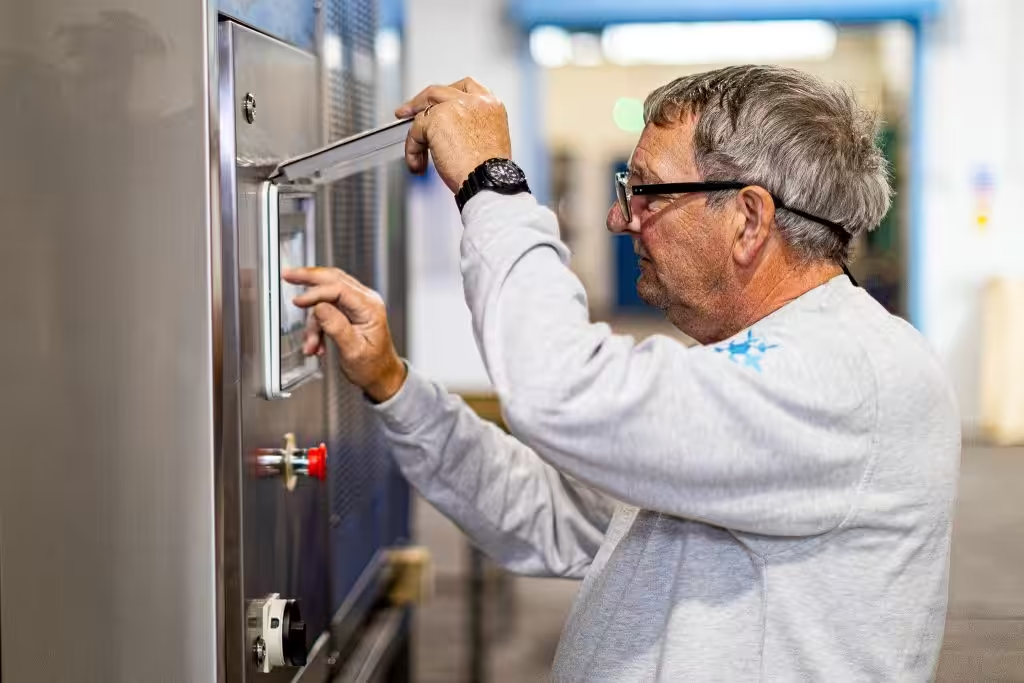
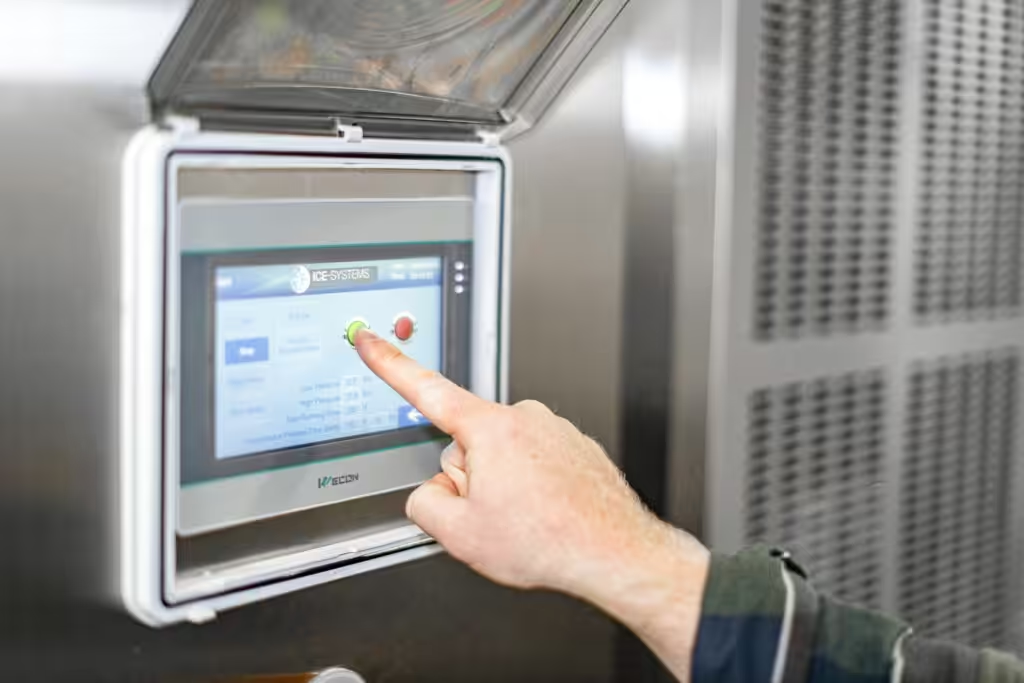
An HMI, or human-machine interface, is the screen used by the operator.
It provides a clearer way to operate and monitor the machine than a basic collection of switches and indicator lights. Depending on the system, the HMI may show:
- Whether the machine is running or stopped.
- The current operating mode.
- Active alarms.
- Water or refrigeration conditions.
- Ice-production settings.
- Timer programmes.
- Maintenance reminders.
- Running hours.
Some Ice Systems installations use an HMI touchscreen to provide control over ice production, including timed operating programmes and automatic hygiene functions. The exact features depend on the machine and specification.
The HMI should make it clear why the machine has stopped. For example, it should distinguish between a normal stop because the bin is full and a fault that requires attention.
Water-Level and Water-Supply Controls
An industrial ice machine needs a consistent supply of water. Water controls can include float switches, level sensors, pressure switches, flow switches and electrically operated valves. These controls make sure the machine has enough water to produce ice correctly.
If the water supply is unavailable or falls below the required level, the control system may prevent the machine from starting, display a low-water warning or stop production after a short delay.
This protects the equipment and prevents the machine from attempting to operate without the correct water supply. Water filters should also be maintained correctly. A blocked or overdue filter can restrict flow and affect machine performance.
Ice-Level and Bin Sensors
A bin or level sensor tells the control system how much ice is being stored. When the storage bin reaches its upper level, the sensor sends a signal to stop ice production. Once enough ice has been removed and the level falls, the machine can start again automatically. Ice Systems offers optional support-frame arrangements with level and bin sensors on relevant flake ice machine models.
The sensor must be positioned correctly and kept clean. A dirty, damaged or incorrectly positioned sensor can cause the machine to stop too early or continue running when the storage area is full.
Refrigeration Controls
Industrial ice machines also use refrigeration controls to manage and protect the cooling system.
Pressure switches are commonly used in refrigeration systems to control compressors and fans or protect the compressor against unsafe operating conditions.
If a serious refrigeration problem is detected, the machine should stop and display an alarm. Repeatedly resetting a refrigeration fault without identifying the cause can place the equipment at risk.
Some protection may be provided by dedicated mechanical or electrical safety devices rather than PLC software. This means essential protection can continue to operate even if the main controller develops a fault.
Motor and Electrical Protection
Industrial ice production can involve compressors, pumps, fans, augers, scraper motors and other moving equipment.
Electrical protection can include:
- Motor overload relays.
- Circuit breakers.
- Fuses.
- Thermal protection.
- Phase monitoring.
- Variable-speed drive alarms.
- Motor-current monitoring.
These devices help protect motors and electrical components against excessive load, overheating, short circuits or an unsuitable electrical supply.
A motor overload should not simply be reset repeatedly. The cause could be a blockage, mechanical resistance, damaged equipment or an electrical problem that requires investigation.
Timers and Automatic Programmes
Timers allow an ice machine to operate around a production schedule. For example, a machine may be set to start before a shift begins so that sufficient ice is available when production starts. It may then stop during cleaning, maintenance or periods of low demand. Depending on the control specification, timers may be used for:
- Scheduled starts and stops.
- Compressor restart delays.
- Water-fill periods.
- Alarm delays.
- Cleaning or hygiene cycles.
- Maintenance reminders.
A delay is particularly useful when a condition is temporary. A brief change in water pressure, for example, may not need to stop the machine immediately. If the problem continues beyond the programmed delay, the control system can then raise an alarm.
Safety Interlocks
An interlock prevents the machine from operating when a required safety or process condition is not available.
Possible interlocks include:
- Emergency-stop circuits.
- Guard or access-panel switches.
- Low-water protection.
- High refrigeration pressure.
- Motor overloads.
- Full-bin detection.
- Downstream conveyor status.
- Ice-discharge equipment status.
For example, if ice is normally discharged onto a conveyor, the machine may be prevented from producing ice when that conveyor is unavailable. This reduces the risk of ice building up around the discharge point.
Safety interlocks should never be bypassed as a way of keeping production running. A bypass can remove the protection designed to prevent equipment damage or injury.
What Alarms Can an Industrial Ice Machine Use?
Alarms inform the operator that a condition requires attention.
Common examples include:
- Low water pressure or water level.
- Storage bin full.
- High refrigeration pressure.
- Low refrigeration pressure.
- Compressor fault.
- Motor overload.
- Pump fault.
- Sensor fault.
- No ice detected during production.
- Communication or HMI fault.
- Service due.
Not every notification should be treated as a serious fault. A full-bin message, for example, may simply confirm that the machine has stopped normally because no more ice is currently required. Alarm messages should clearly explain what has happened and what the operator should do next.
Operational Best Practices:
- Do not change setpoints without authorisation — alarm limits and control parameters are set for the machine and its environment, and altering them informally can mask a genuine fault.
- Investigate repeated alarms — a warning that keeps returning is telling you something even if the machine restarts each time, so resetting it repeatedly without checking the cause just delays the real fix.
- Keep sensors clean — a dirty or misaligned level or bin sensor can make the machine stop too early or keep running when storage is already full.
- Maintain the water supply — replace filters on schedule and check pressure and flow, since water restrictions are one of the most common causes of reduced output.
- Keep control panels closed and dry — moisture and dust ingress can damage electronics and cause intermittent faults that are hard to diagnose later.
- Monitor normal performance — knowing the machine’s usual output and fill times makes it much easier to spot a gradual change before it becomes a shutdown.
- Test safety devices — interlocks and emergency stops should be checked as part of routine servicing, not only when something has already gone wrong.
Choosing the Right Controls for an Ice Production System
The correct controls depend on the size of the machine, the required production rate and how the ice is handled after it leaves the machine.
A standalone machine filling a single container may only need local automatic controls and bin-level sensing. A larger installation may require several machines, central storage, conveyors, remote monitoring or integration with a production-line control system.
Control requirements should therefore be considered during the design and installation stages. This ensures that the machine, storage arrangement and wider production process operate together correctly.
Ice Systems supplies industrial flake ice machines for high-volume food processing applications, with capacities and control options available for different production requirements.
For advice on matching controls to your installation, see our industrial ice machine range.
Frequently Asked Questions
What happens when an industrial ice machine detects a fault?
The response depends on the type of fault. A minor condition may produce a warning, while a serious refrigeration, electrical or safety fault may stop the machine to protect the equipment.
Can an industrial ice machine be connected to a production line?
An industrial ice machine can be integrated with other production equipment where the required controls and interfaces are included in the system design. This may allow ice production to respond to storage levels, conveyors, batching equipment or production demand.
How often should industrial ice machine controls be checked?
Basic status, alarms and visible sensors should be checked during routine operation. Safety devices, electrical controls and refrigeration protection should also be inspected and tested as part of a planned maintenance programme.