





Preventing Downtime in High-Volume Environments
For businesses that rely on large quantities of ice, unexpected downtime can quickly become a serious problem. A fault with an industrial ice machine can affect production schedules, product temperatures and the amount of ice available during busy periods. This is particularly important in industries such as seafood and meat processing, where cooling is often a key part of the production process.
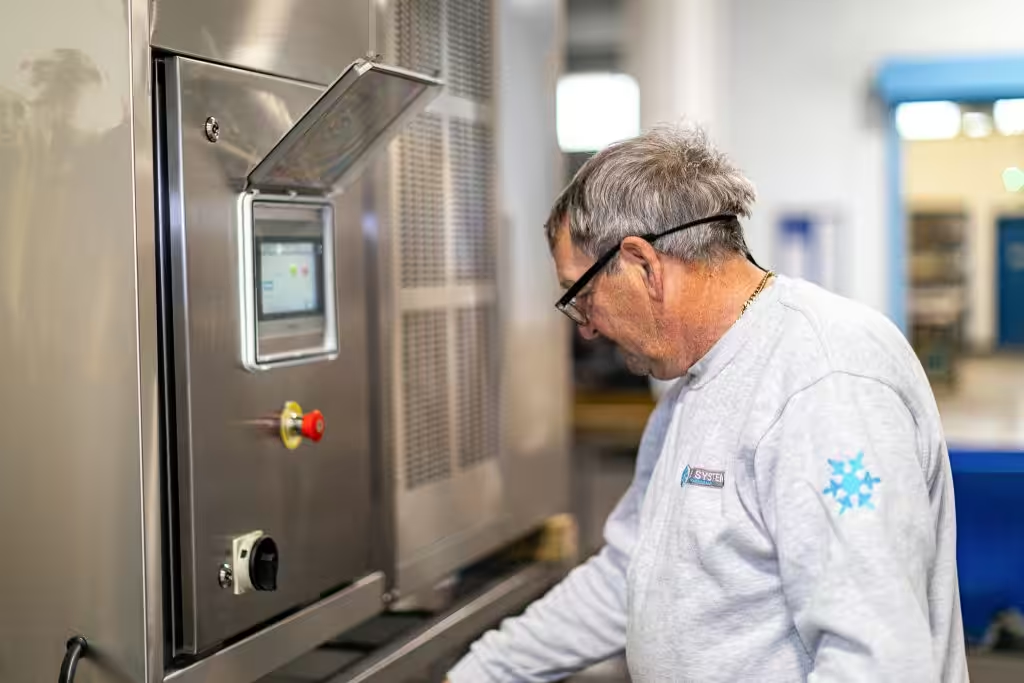
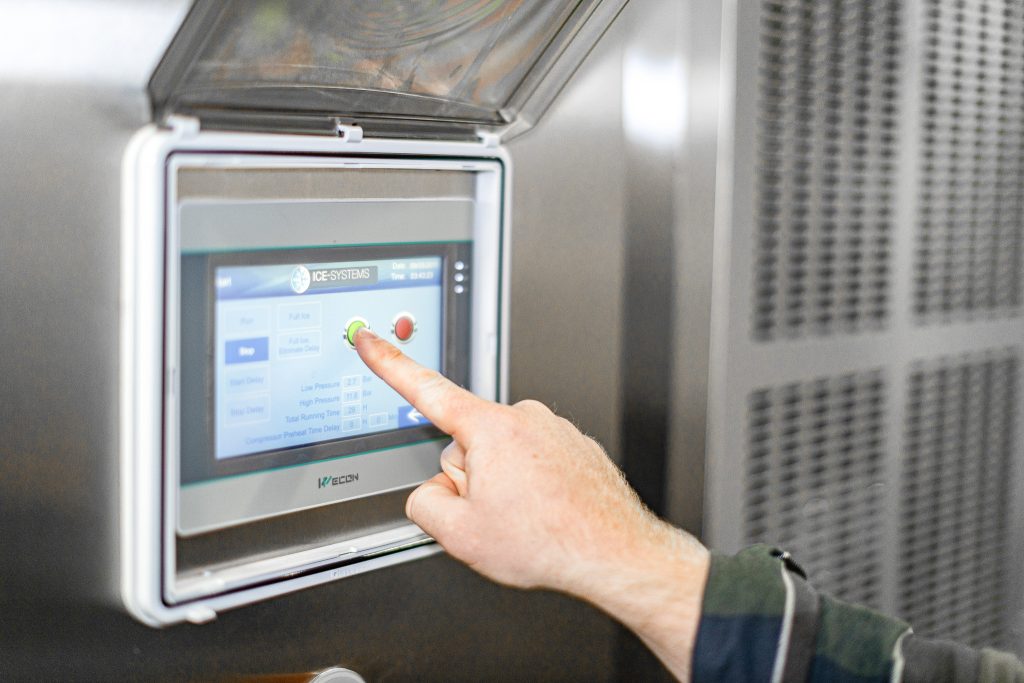
Modern control and monitoring systems help operators understand how their ice equipment is performing. They can show when the machine is running, how much ice is available and whether a problem needs attention. By spotting changes early, businesses can act before a minor issue develops into a complete shutdown.
Why Industrial Ice Machine Controls Matter
An industrial ice machine contains several parts that must work together correctly. These can include the water supply, refrigeration system, motors, pumps and ice storage equipment. The control system manages these parts and makes sure they operate in the correct order. It can answer important questions such as:
- Is the machine ready to run?
- Is there enough water available?
- Does the storage bin need more ice?
- Is the machine producing ice normally?
- Has a fault occurred?
- Does the machine need maintenance?
Without clear controls, operators may only become aware of a problem when the ice supply begins to run out. Monitoring provides earlier warning and gives the team more time to respond.

How PLC Controls Work
A programmable logic controller, usually known as a PLC, acts as the main control centre for an industrial ice system. The PLC receives information from sensors around the machine. It then uses this information to decide when the machine should start, stop or display an alarm.
A typical operating sequence may look like this:
Ice level becomes low > PLC checks water supply and safety conditions > Ice machine starts > Ice is produced and stored > Storage bin reaches its full level > Machine stops automatically
If one of the required conditions is not available, the PLC can prevent the machine from starting. For example, it may stop production if the water supply is too low or if the ice storage area is already full. This automatic control reduces the need for constant manual checks.
Control Architecture Overview
A typical monitoring system may include the following equipment:
Machine and storage sensors > PLC > Local control screen > Alarms and monitoring dashboard > Operators and service engineers
The sensors collect information from the machine. The PLC processes that information, while the local control screen allows operators to see the current machine status. Where remote monitoring is included, selected information can also be displayed on another computer or dashboard.
Remote Monitoring and Diagnostics
Remote monitoring allows authorised users to check the condition of an industrial ice machine without being directly beside it.
Depending on the system, users may be able to view:
- Whether the machine is running or stopped.
- The current ice-storage level.
- Recent alarms.
- Production trends.
- Machine running hours.
- Water or refrigeration conditions.
- Upcoming maintenance requirements.
Remote monitoring can be particularly useful for facilities operating long shifts or several production areas.
It can also help during fault diagnosis. Instead of simply reporting that the machine has stopped, the operator may be able to provide the engineer with the alarm message and information about what happened before the fault.
Remote monitoring should be designed as part of the individual installation. The machine’s essential operating and safety controls should remain within the local control system.
Alarm Thresholds and Performance Alerts
An alarm should tell the operator that something requires attention.
Not every machine stop is a fault. For example, stopping because the storage bin is full is part of normal operation. The control system should make the difference between a normal stop and a genuine fault clear.
The actual alarm limits and delays should be set during installation and commissioning. They must suit the machine, its environment and the way the site uses ice. Too many unnecessary alarms can also cause problems. Operators may begin to ignore alerts if they occur too often. Alarms should therefore be clear, useful and linked to a specific action.
A typical alarm sequence may look like this:
Refrigeration temperature moves outside its normal range > PLC applies a short delay to confirm the reading > Condition persists > Alarm raised on local screen and dashboard > Event logged and, where fitted, sent to the assigned engineer > Machine continues running if safe, or moves to a protected shutdown if not
What Should an Ice Monitoring Dashboard Show?
A good dashboard should make the most important information easy to understand. It does not need to show every technical reading on the machine. Its main purpose is to help operators quickly identify whether the system is performing normally. A useful dashboard may show:
- Current machine status
The operator should be able to see whether the machine is running, waiting for demand, stopped because the bin is full or stopped because of a fault.
- Ice production
The dashboard can show the current or recent production rate. This helps operators identify when output is lower than expected.
- Storage level
Showing how much ice is currently stored helps the production team prepare for upcoming demand.
- Active alarms
Current alarms should be clearly displayed, along with a simple explanation of what the operator should check.
- Recent performance
A basic graph can show production and storage levels over the previous shift or day. This makes gradual changes easier to identify.
- Maintenance information
Running hours, service reminders and repeated alarm counts can help the maintenance team plan work before a failure occurs.
Monitoring Capacity During Peak Demand
Daily ice use is not always consistent. A business may use a moderate amount of ice for most of the day and then require a much larger quantity during a particular shift, production run or delivery period.
Ice Systems supplies industrial flake ice machines with published capacities ranging from 600 kg to 9,000 kg per 24 running hours. However, monitoring is still important because installed capacity and immediately available ice are not always the same thing.
During peak demand, operators need to know:
- How quickly ice is being produced.
- How much ice is currently stored.
- How quickly the stored ice is being used.
- Whether the machine is keeping up with demand.
- How long the available supply is likely to last.
This can be especially important in the seafood industry, where demand may increase during unloading, processing, packing or transport. It is also relevant to meat processing, where ice may be required for particular batches or production stages.
Monitoring the storage level allows operators to react before the bin becomes empty. Where production schedules are known in advance, the machine can also be used to build up an ice reserve before the busiest period begins.
Using Data for Preventative Maintenance
Monitoring is not only useful when a machine stops. It can also highlight gradual changes in performance.
Possible warning signs include:
- The machine taking longer to fill the storage bin.
- Ice output falling over time.
- The same alarm appearing repeatedly.
- The machine starting and stopping more often than usual.
- Water-supply warnings becoming more frequent.
- Motor or refrigeration readings moving outside their normal range.
These changes do not always identify the exact cause of a problem. However, they tell the maintenance team that the machine should be inspected. This makes it possible to plan maintenance at a suitable time instead of waiting for an unexpected failure during production.
Performance information can also help engineers confirm whether a service or repair has worked. They can compare output before and after the work and check that the machine has returned to normal operation. Ice Systems supports its equipment with installation, commissioning, operator training, servicing and ongoing technical assistance.
Reducing Downtime Through Better Visibility
Preventing downtime is not only about responding quickly after a machine fails. It is also about recognising the early signs that performance is changing.
A well-designed industrial ice control system can:
- Start and stop production automatically.
- Monitor ice-storage levels.
- Protect the machine when a fault occurs.
- Alert operators to developing problems.
- Show whether production is meeting demand.
- Provide useful information to service engineers.
- Support planned maintenance.
The result is a clearer understanding of how the ice system is operating. Businesses that depend on reliable ice production can explore the Ice Systems range of industrial flake ice machines or industrial ice machines, or contact the Ice Systems team for advice on system controls, production capacity, installation or ongoing support.
Frequently Asked Questions
What should an industrial ice system monitor?
An industrial ice system should monitor whether the machine is running, the amount of ice in storage, production output, water availability, alarms and machine running hours. More detailed systems may also monitor refrigeration and motor performance.
What is a PLC in an industrial ice machine?
A PLC is the controller that manages the machine’s operating sequence. It receives information from sensors and decides when equipment should start, stop or display an alarm.
Can an industrial ice machine be monitored remotely?
Remote monitoring can be included where the machine controls and site network allow it. It may provide access to machine status, alarms, storage levels and performance trends. The exact arrangement should be agreed during the system-design stage.
Can monitoring prevent every breakdown?
No. Monitoring cannot prevent every component failure. It can, however, provide earlier warning of changing performance and give operators or engineers more information when a problem occurs.
How can monitoring reduce maintenance costs?
Monitoring can identify gradual changes before they cause a complete shutdown. This allows maintenance to be planned and can reduce the time required to diagnose recurring faults.